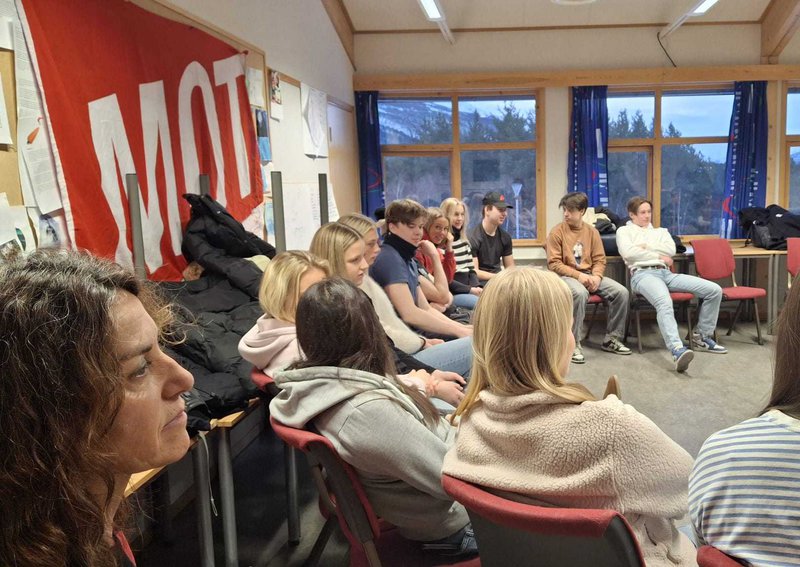
Last year, we organised an Erasmus+ mobility program with students from Oppdal Videregående Skole, focusing on Sustainable Development Goals (SDGs) 5 and 13: Gender Equality and Climate Action. We discovered that they had a very interesting program aimed at developing inter- and intrapersonal skills called MOT. As part of our Erasmus Plan, which outlines a five-year strategy to achieve five general goals for improving our school, we identified an opportunity to conduct a Job Shadowing mobility focused on adolescent mental health.
What was the topic?
Our goal was to understand how the MOT program was implemented at an organisational level within the institute. We aimed to observe some sessions to see examples of its direct application and best practices. Additionally, we wanted to engage with the teachers, students, and management teams to discuss the challenges they faced when they first adopted the program and the long-term impacts they observed.
What did you take away from this that could be applied to Catalan schools?
I realised that we cannot directly replicate the MOT program in Catalonia under the same conditions as in Norway. This is because the program is funded by local communities and implemented nationwide, which requires collaborative effort and financial investment. Furthermore, the teachers’ commitment involves annual training sessions that can last more than a day, and not all teachers here are willing to engage in that level of commitment.
However, I noticed that MOT is applied on an extracurricular basis, meaning outside of the regular subjects. As an improvement measure, they aim to connect the topics they cover—such as empowerment, the courage to say no, inclusion, and empathy—to various subjects in the curriculum. This reminded me of the What’s Up program developed by the Openly Mental Health Organisation, which is present in some schools in Catalonia, though it is not yet widely implemented.
Is there something similar in Catalonia?
Indeed, the What’s Up program plans to develop personal and social skills similar to those addressed by MOT, integrating them into certain subjects to equip students with tools for managing their daily lives. However, unlike MOT, this initiative lacks the cohesive approach that could integrate mental health into the academic schedule at a broader level in Catalonia. Currently, the incorporation of such activities depends on the goodwill of individual teachers who choose to include them in their classes without formal training.
What’s Up has established well-prepared and guided activities, but it would be greatly beneficial to mirror Norway’s approach by providing structural support for teacher training and the dissemination of activities throughout Catalonia. This would enhance awareness of adolescent mental health and its benefits. In Norway, MOT is highly visible in high schools, with posters featuring national celebrities and athletes associated with the program. Such visibility is crucial for addressing issues related to vulnerability and emotions, as making these topics public fosters acceptance and shared understanding.
 ERASMUS+ PROJECTS